




-
01 Optimize Inventory Management:
Precisely control inventory capacity to reduce excess stock and stockouts, improving warehouse space utilization;
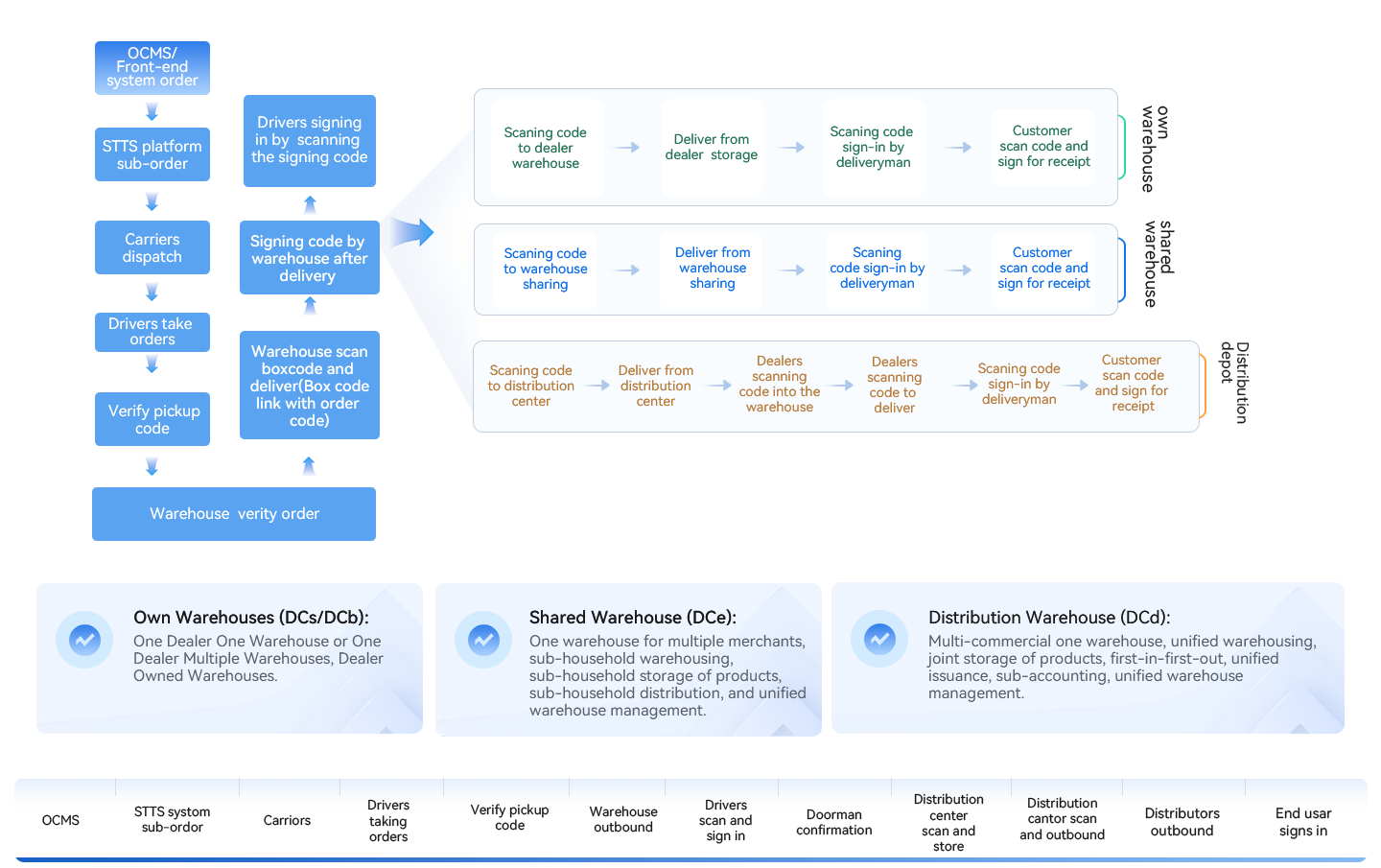
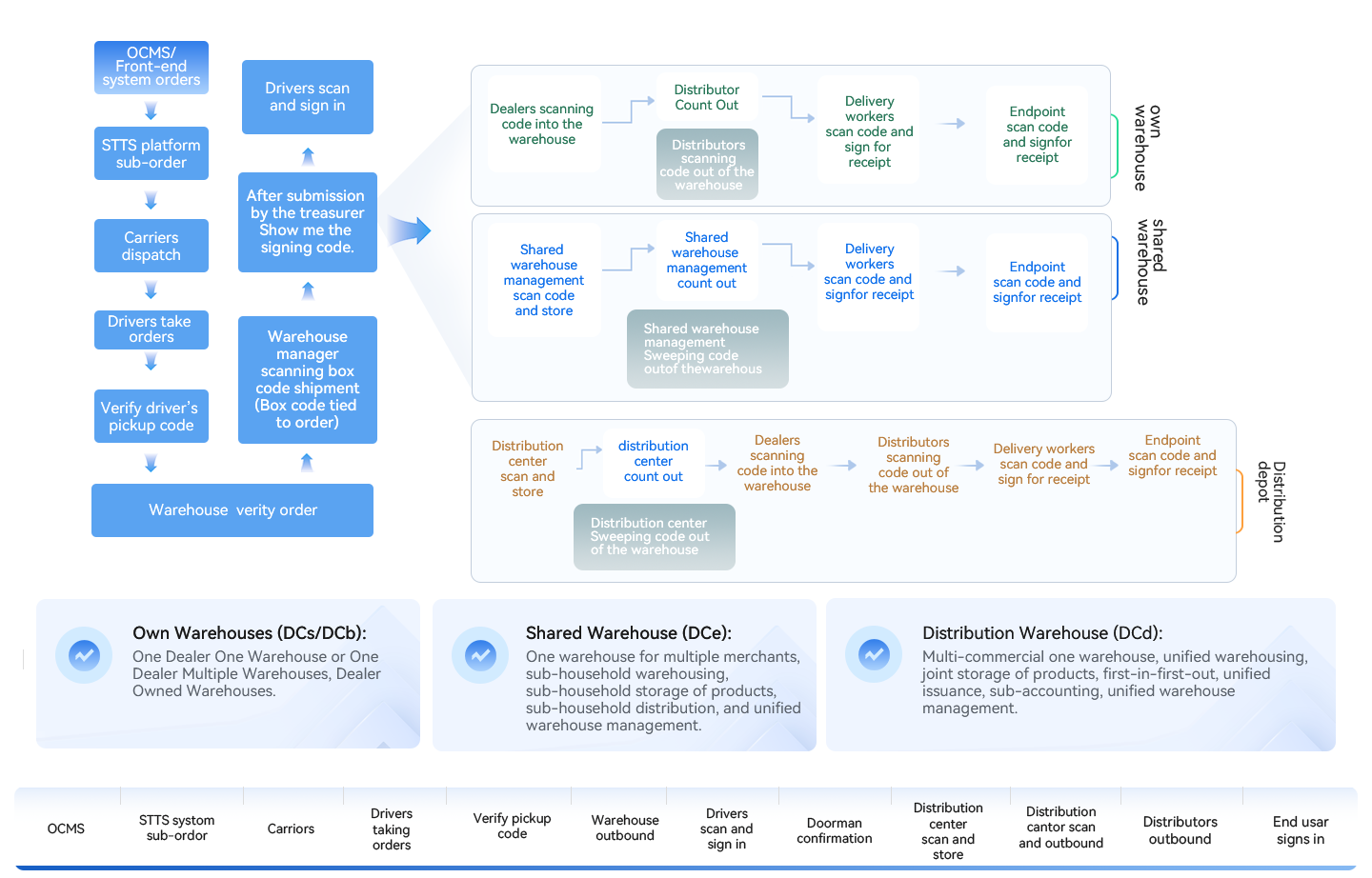
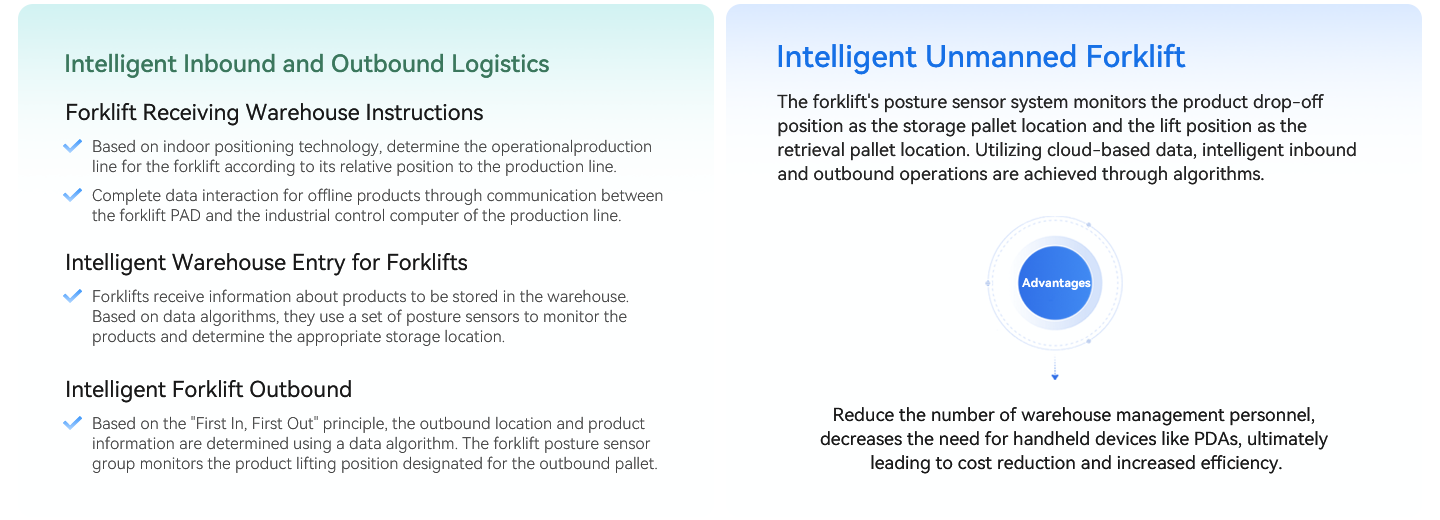
Strategically plan warehouse layout to ensure the first-in, first-out principle;
Conduct real-time inventory checks and generate various reports on product inflow and outflow as needed;
-
02 Reducing Costs
Plan logistics routes effectively. Coordinate logistics uniformly. Standardize factory pricing. Prevent product diversion and address the problem at its source;
Optimize the use of human resources by reducing positions such as warehouse management, effectively lowering operational costs;
-
03 Improve Efficiency
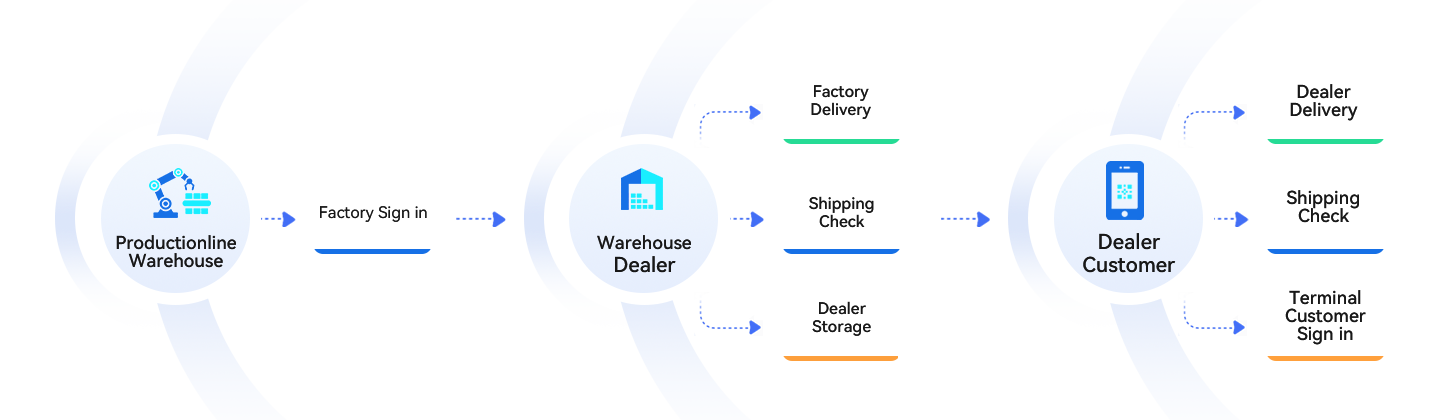
By optimizing processes, warehouses can be informed of pickup details in advance, allowing for better scheduling of pickup times and avoiding queues. This leads to smoother and faster logistics operations, thereby enhancing overall efficiency.
-
04 Accurate Inventory Allocation
The sales management department can precisely understand the sales performance of each retail outlet by analyzing historical sales data. This enables them to allocate inventory to various outlets effectively, preventing excess stock or stockouts at these locations.
-
05 Precise Marketing
Based on smart analysis of logistics data for various products at different distribution nodes, precision marketing is achieved by targeting specific times, locations, and products.
-
06 Intelligent Analysis
Utilizing big data analysis and mining to provide data support for enterprise operational decisions.

-
 Real-time data
By providing accurate and real-time updated product flow data, it establishes a solid foundation for streamlining business processes and maximizing effectiveness.
-
 Bidirectional management
Utilizing digital tools to implement a two-way tracking and tracing management system enhances management precision and further promotes the intelligent transformation of brand operations.
-
 Reduce cost and increase efficiency
This approach effectively reduces costs while accelerating efficiency improvements, paving the way for a leap in brand competitiveness.